Divorce regret: missing the marriage, or missing the life?
Second thoughts after a divorce are common, and they don't always mean you got it wrong. Studies of divorcing parents and of people's wellbeing before and after divorce help separate grief for what you lost from a real wish to go back.
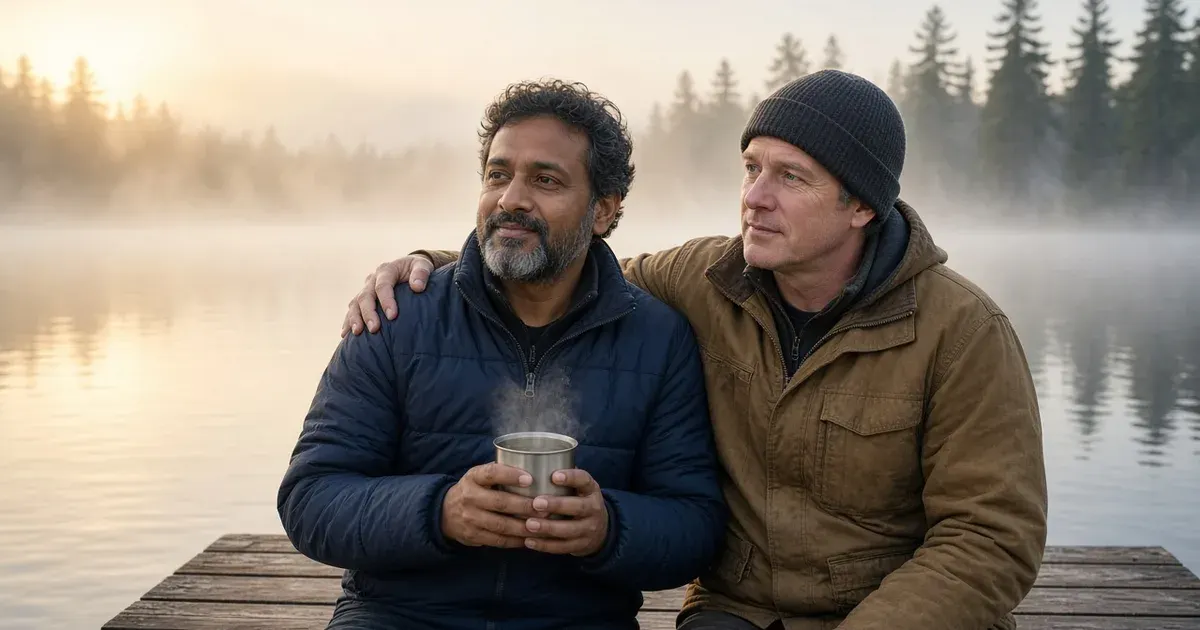
It might hit on a Sunday, or on the drive past the old house, or when someone new does something that reminds you of how good it was at the start. Suddenly the divorce feels like a mistake you can’t undo.
Some of the time, that feeling is grief doing its work. Some of the time, it’s telling you something about the marriage. The research can’t tell you which, but it does give you some ways to sort it out.
Second thoughts are common, even mid-divorce
In a study of 2,484 parents going through divorce, surveyed after required parenting classes, about 1 in 4 said they believed their marriage could still be saved with hard work. About 3 in 10 said they’d potentially be interested in reconciliation services. Men were more interested than women, and so were people whose spouse had initiated the divorce.1
So if you’re feeling this, you’re not unusual, and it doesn’t automatically mean you were wrong.
The reason it ended matters
A related study asked divorcing parents why their marriages ended. The most common answers were growing apart (55%) and not being able to talk to each other (53%). People who cited growing apart, different tastes or money problems were less interested in reconciling. Abuse and adultery weren’t linked to interest either way.2
That’s a useful lens. If your honest answer is “we drifted,” it may help to know that, in this study, drifting apart went with less appetite for trying again, not more. If it was closer to “we stopped being able to talk,” ask yourself whether that’s something either of you would now do differently. If abuse was part of why it ended, regret is still a real feeling, but it’s not a reason to go back, and outside support matters more than any article.
Feelings about a marriage move around
A national study of 3,000 married people aged 25 to 50 found a quarter had thought about divorce in the past six months. A year later, many of those thoughts had shifted, mostly toward less serious thinking about divorce.3 That study is about people still married, not divorced. But it’s a reminder that how we feel about a marriage is not fixed. Regret after the fact can move just as much.
On average, divorce isn’t the disaster people fear. A British study tracked people’s wellbeing for years before and after divorce and found that, on average, divorcing people became happier afterward, and men and women benefited equally.4 Averages hide a lot of individual stories, so this doesn’t tell you how you’ll feel. It does suggest that a hard patch now isn’t proof you chose wrong.
And sometimes people do go back
The Guardian ran a 2024 feature on couples who divorced and later remarried each other.5 It’s real, and it’s the outcome some people quietly hope for. It’s also a handful of stories, not a typical path.
If what you mostly feel is stuck, why you can’t move on from your divorce is about that heavier, unmoving version. And if regret is making you wonder whether you should be dating at all, how to know you’re ready to date after divorce has a few honest checks.
What we don’t know
- There’s no solid national figure for how many people regret their divorce. Numbers you’ll see online often trace back to small or unclear samples.
- The reconciliation studies surveyed parents during divorce and asked about interest, not what people actually did afterward. The 2012 study drew from a single Minnesota county.
- The wellbeing study reports averages across many people. Your experience can differ a lot from the average.
Try it
Missing them, or missing the shape of the life? Sort each thought.
Steal this text
Say it in your own words, or start from these
Talking to a friend who knew you both
I'm having second thoughts about the divorce. Not asking you to fix it. Can you remind me what you saw back then?
If you want to test the water with your ex
I've been thinking about us, not in a pressured way. Would you be open to a coffee to just talk?
People who talk about this
- Credentialed source
Eli J. Finkel
Research on how modern marriage and long term relationships work, and what partners expect from each other.
- Credentialed source
- Trending voice
Julie Menanno
How couples get stuck in conflict cycles and how to feel secure with a partner.
- Credentialed source
Lori Gottlieb
What happens in the therapy room, including breakups, dating choices and the stories people tell about love.
- Credentialed source
Pepper Schwartz
Research and writing on love, sex and relationships, including dating and partnership later in life.
Further reading
American Psychological Association
Healthy divorce: How to make your split as smooth as possible (opens apa.org)Psychologists explain the anger, grief and fear divorce stirs up and how to manage them without lasting damage.
Sources
- Interest in Marital Reconciliation Among Divorcing Parents
- Reasons for Divorce and Openness to Marital Reconciliation
- What Are They Thinking? A National Study of Stability and Change in Divorce Ideation
- Do Divorcing Couples Become Happier by Breaking Up?
- Will you marry me (again)?: the rise of 'divorce regret'